Most Common Product Questions in Marketplaces & Sales-Driven Answers
Discover the top 5 most common product questions in marketplaces and learn professional response strategies to convert them into sales.


Product Questions in Marketplaces: Why They Matter
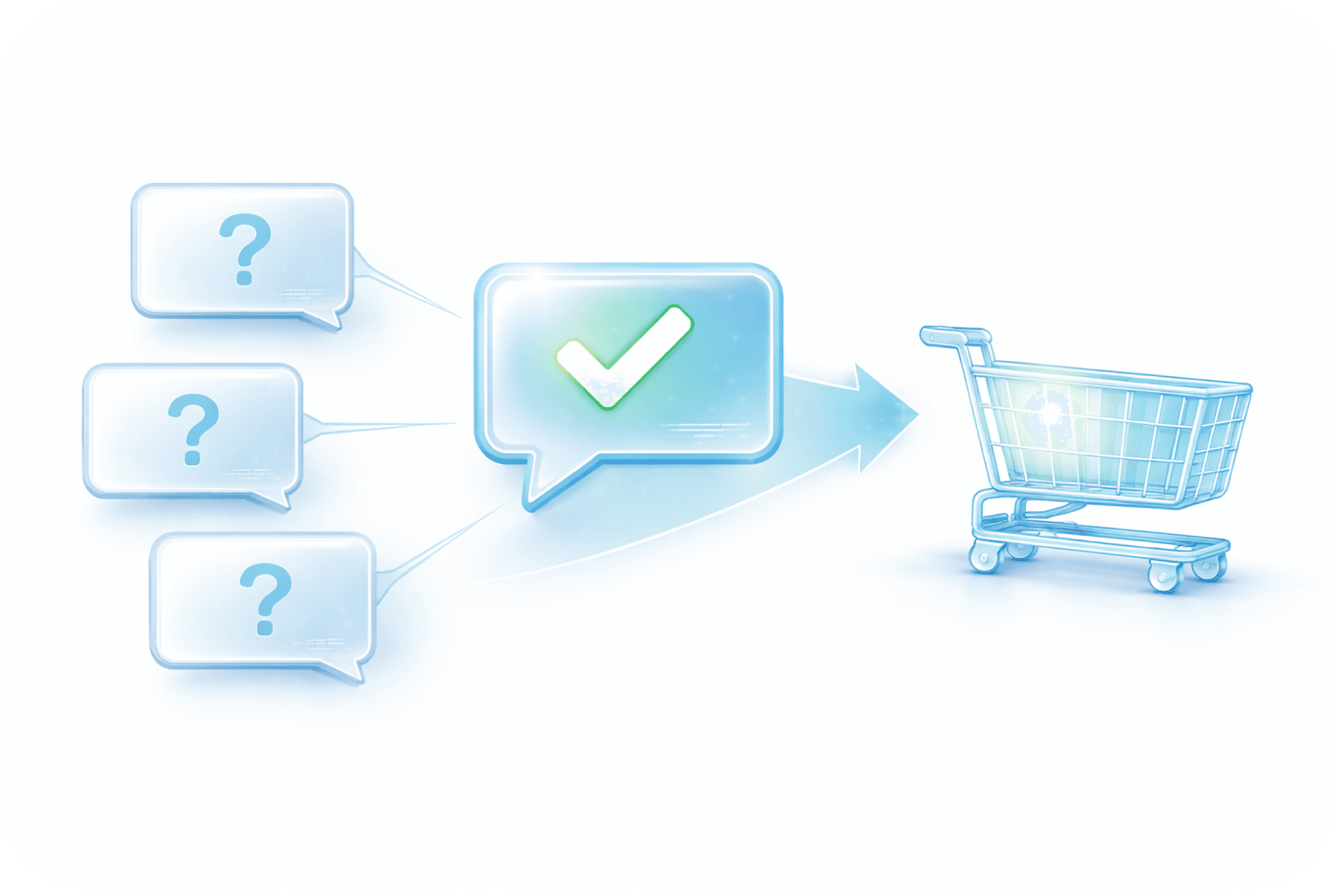
Product questions in marketplaces are the most direct point of contact with the customer. These questions are usually asked on the product page, at the moment closest to the purchase decision. Therefore, the content and tone of the response are just as important as the question itself in determining the sales outcome.
Below, you will find the most common product questions in marketplaces and the response approaches that ensure they turn into sales.
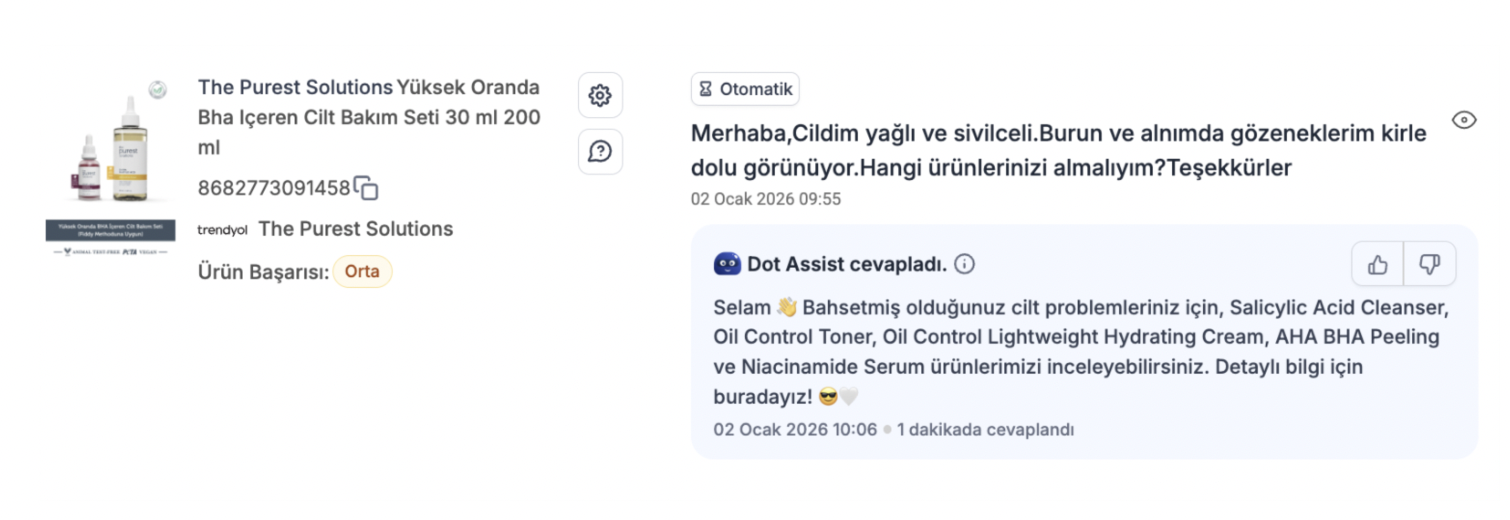
1️⃣ “Is this product suitable for me?”
Why is it critical? This question shows that the user is genuinely considering the product. Indecision is usually not about technical specs, but about personal suitability.
- Response example that doesn't convert: 💬 You can check the product description.
- Sales-driven response approach: References the information provided by the user, explains why the product is suitable, and offers alternatives if necessary. This approach makes the user feel understood and builds trust.
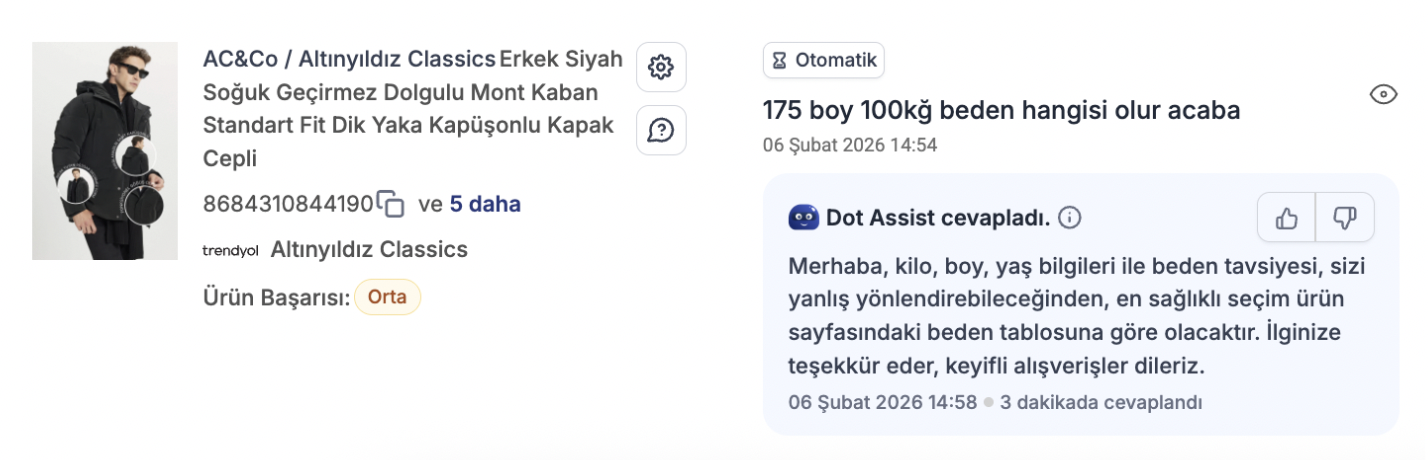
2️⃣ “What is the size / fit of this product?”
Why is it critical? Size and measurement questions are among the questions with the highest risk of return in marketplaces. While misleading guidance might trigger a sale in the short term, it increases return rates and store score losses in the long run.
- Non-converting (risky) response example: 💬 “Size XL will be suitable for you.”
- Sales-driven response approach (Healthy Approach): Instead of directly stating a size, it provides clear information about the product fit (slim/regular). It explains fabric elasticity and guides the user on how to read the size chart. This creates the right expectation and reduces return risks.
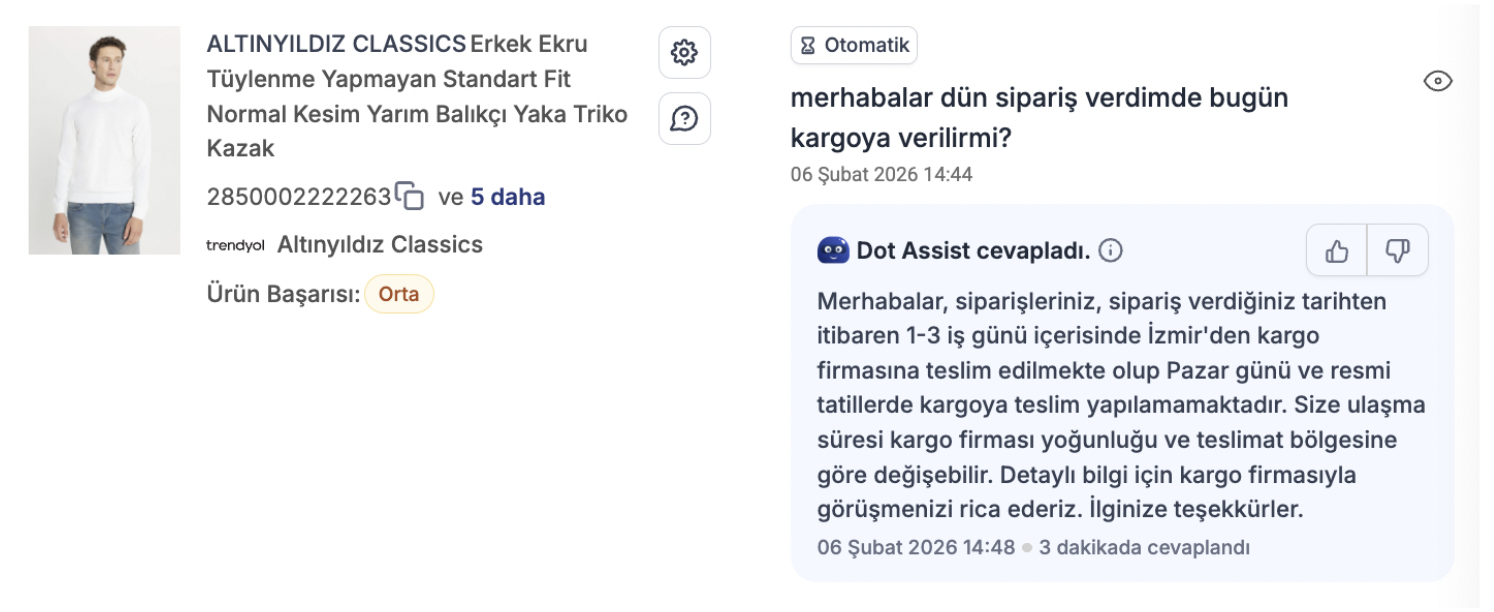
3️⃣ “When will it be shipped / when will I receive it?”
Why is it critical? Delivery time directly impacts the purchase decision. The user wants clarity; however, this clarity should be built on accurate expectations rather than absolute promises.
- Non-converting (risky) response example: 💬 “It will be delivered in 2 days.”
- Sales-driven response approach: Separates the order preparation time from the delivery process. Offers a specific but flexible time frame. Clarifies exceptions like public holidays and transparently states variables in the shipping process.
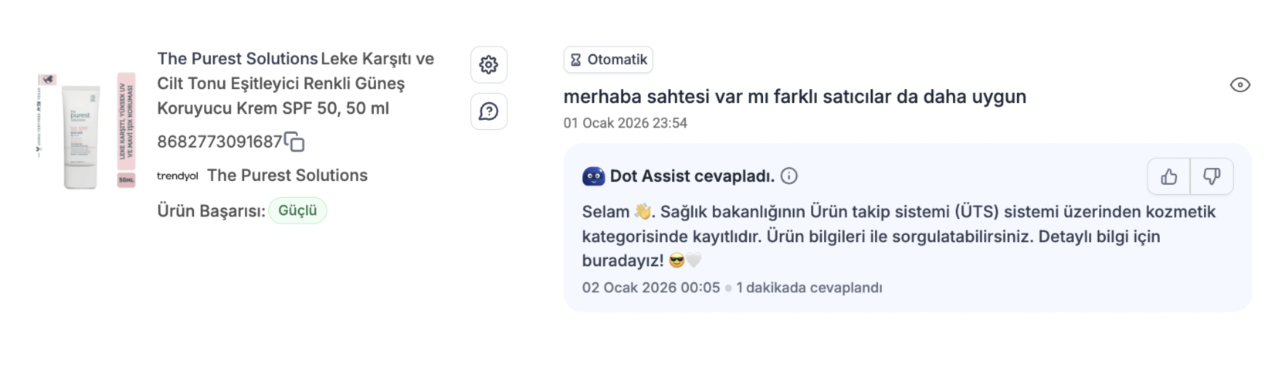
4️⃣ “Is this product original / does it have a warranty?”
Why is it critical? This question is directly related to trust. The language of the response determines the perception of the store.
- Response example that doesn't convert: 💬 Our products are original.
- Sales-driven response approach: Explains the source and warranty conditions. Uses clear statements and official process highlights that support trust. These types of responses make the store stand out regardless of price competition.
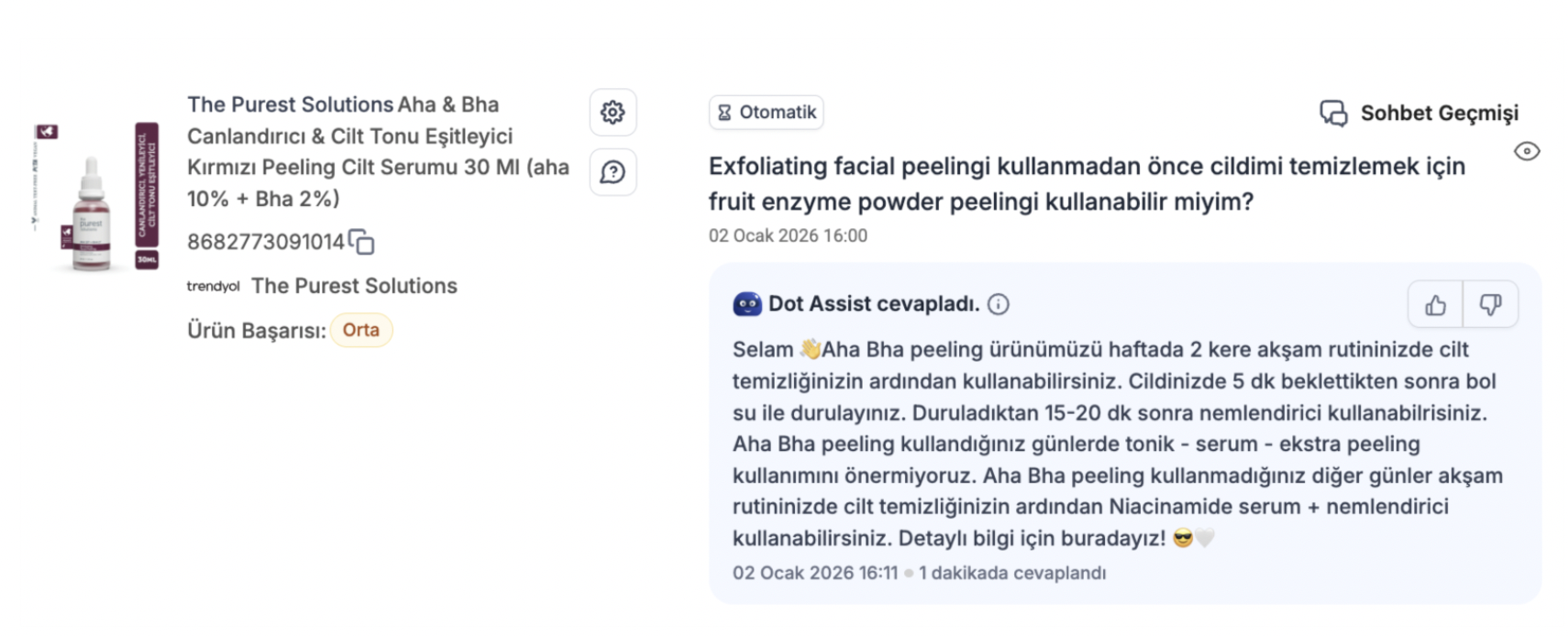
5️⃣ “How do I use this product?”
Why is it critical? The user is likely stuck between two products or trying to understand the product's promise. The answer to this question determines the direction of the sale.
- Response example that doesn't convert: 💬 You can compare the product features.
- Sales-driven response approach: Explains usage step-by-step in an understandable order. Specifies critical details like frequency, duration, or usage limits. Offers practical guidance suitable for the user's daily routine.
Why Can't These Responses Be Maintained at the Same Quality?
All these questions require product knowledge, change based on context, and cannot be solved with a one-size-fits-all answer. During busy periods or after-hours, it becomes impossible to maintain this quality manually. This is where AI automation comes in.
How Does a Correct Response Experience Turn Into Sales?
Dot Assist focuses on these most frequently asked product questions. This AI customer representative learns your brand, products, and communication tone to generate responses with both accurate information and a brand-appropriate language.
- Responses are not copies; they are product-specific and context-aware.
- It creates the feeling of a real human touch with the user.
- It accelerates the purchase decision within seconds.
Real Marketplace Results: Brand Examples
- Eczacıbaşı: Reduced response time from 15 hours to 5 minutes with Dot Assist, achieving a 0.3-point increase in store rating.
- Flormar: Analyzed frequently asked questions to improve product descriptions and reduced repetitive inquiries.
- Madame Coco: Gained time savings equivalent to the workload of a full-time employee in one month.
Summary
The most common product questions in marketplaces represent the moment the purchase decision is made. They can convert into sales through the content and tone of the response, or they can be quietly lost when answered incorrectly or too late.
Turn Product Questions Into Sales
👉 Try Dot Assist for 10 days free and see in your own store how the most common product questions turn into sales.



.png&w=3840&q=76)