What Is an AI Agent? How AI Agents Work in E-Commerce
What is an AI agent and how is it different from a chatbot? Learn how AI agents work, which tasks they take on in marketplaces and on your website, and what to look for when choosing one.
It's 11 p.m., your team logged off hours ago, and a new product question just landed in your store. At the same moment, a visitor on your website gives up on the filters and closes the tab. Sound familiar? Both moments are missing the same thing: someone who understands what the shopper wants and offers the right answer or the right product right then.
That's exactly the gap AI agents are built to close. In this guide, we'll walk through what an AI agent is, how it differs from a chatbot, how it works, and what it can take off your plate in e-commerce, from marketplaces to your own website.
What Is an AI Agent?
An AI agent is an artificial intelligence application that interprets information, makes decisions and takes action through connected systems to reach a given goal. It does more than generate text in response to a question: it determines which steps are needed to reach the goal, accesses the data it needs and carries out the result.
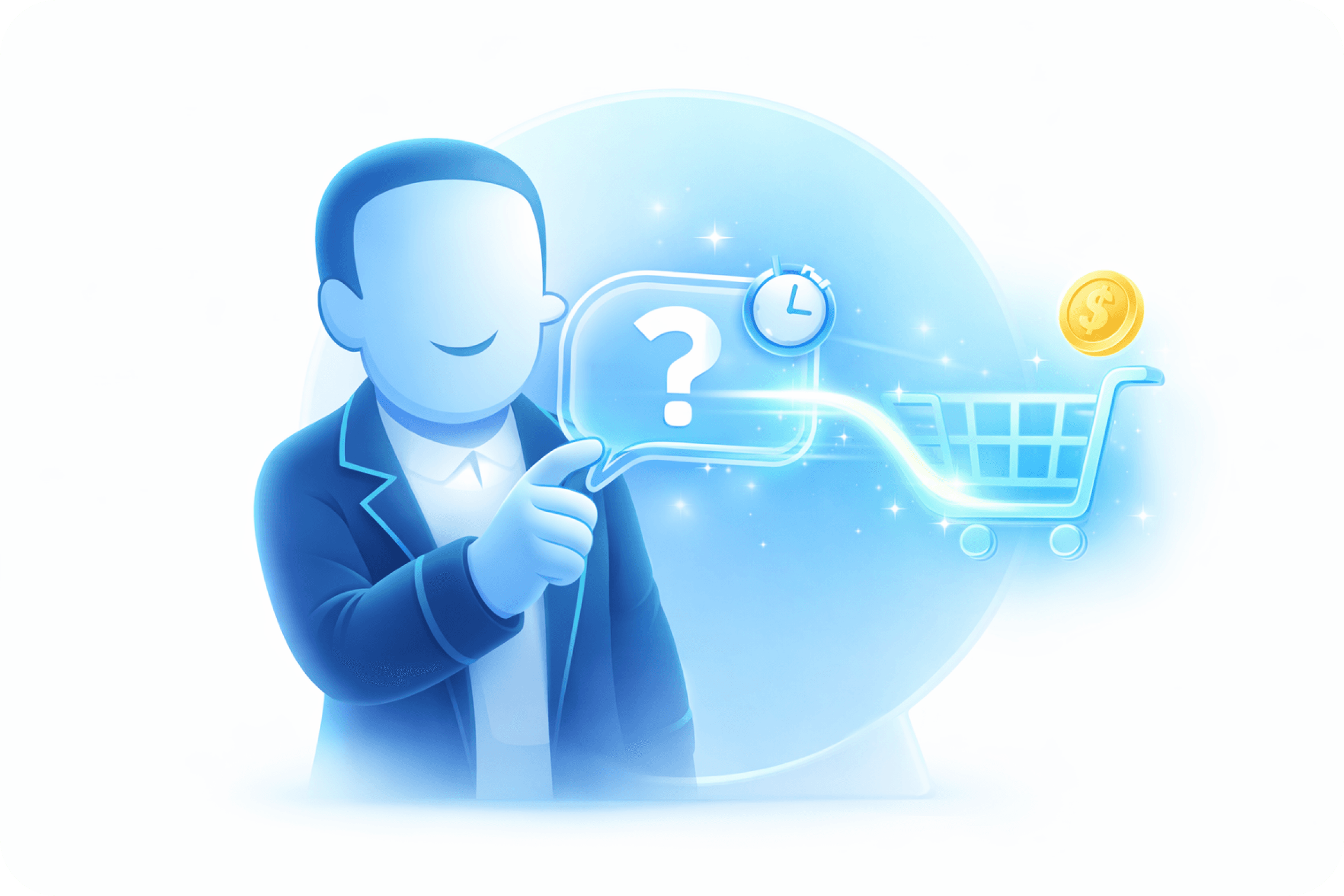
For example, an AI agent on an e-commerce website understands a visitor's message such as "I'm looking for an easy-to-clean sofa that fits my small living room," finds suitable products in the catalog, checks stock and price, and adds the chosen product to the cart.
How Does an AI Agent Work?
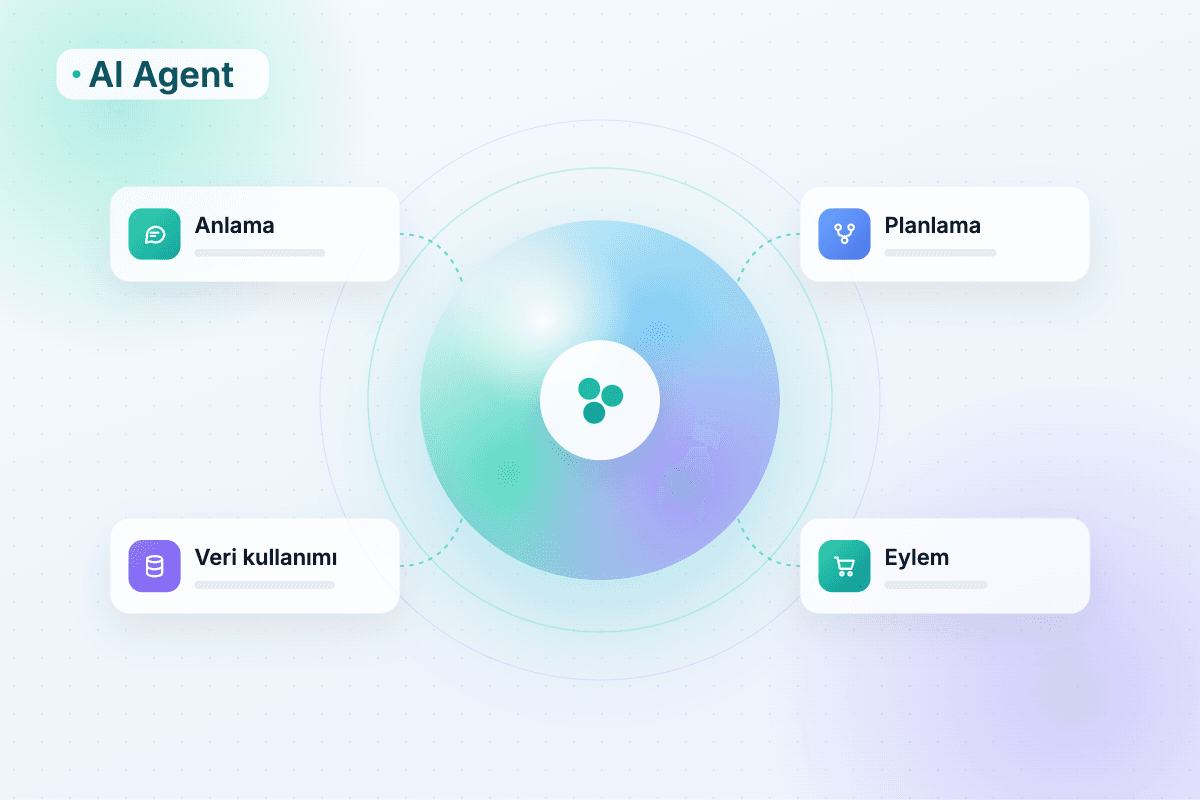
So how does an AI agent actually do this? Behind the scenes, there's usually a four-step cycle:
- Understanding: It analyzes the user's natural-language message, the context and the actual need.
- Planning: It decides which information and which steps are needed to reach the goal. When necessary, it asks a clarifying question.
- Using data and tools: It pulls up-to-date information from connected sources such as the product catalog, stock, order or delivery systems.
- Action: It answers, recommends products, compares options or completes an action such as adding an item to the cart.
This cycle is what separates an AI agent from systems that follow a fixed script: it can take a different path in each conversation depending on what the user needs.
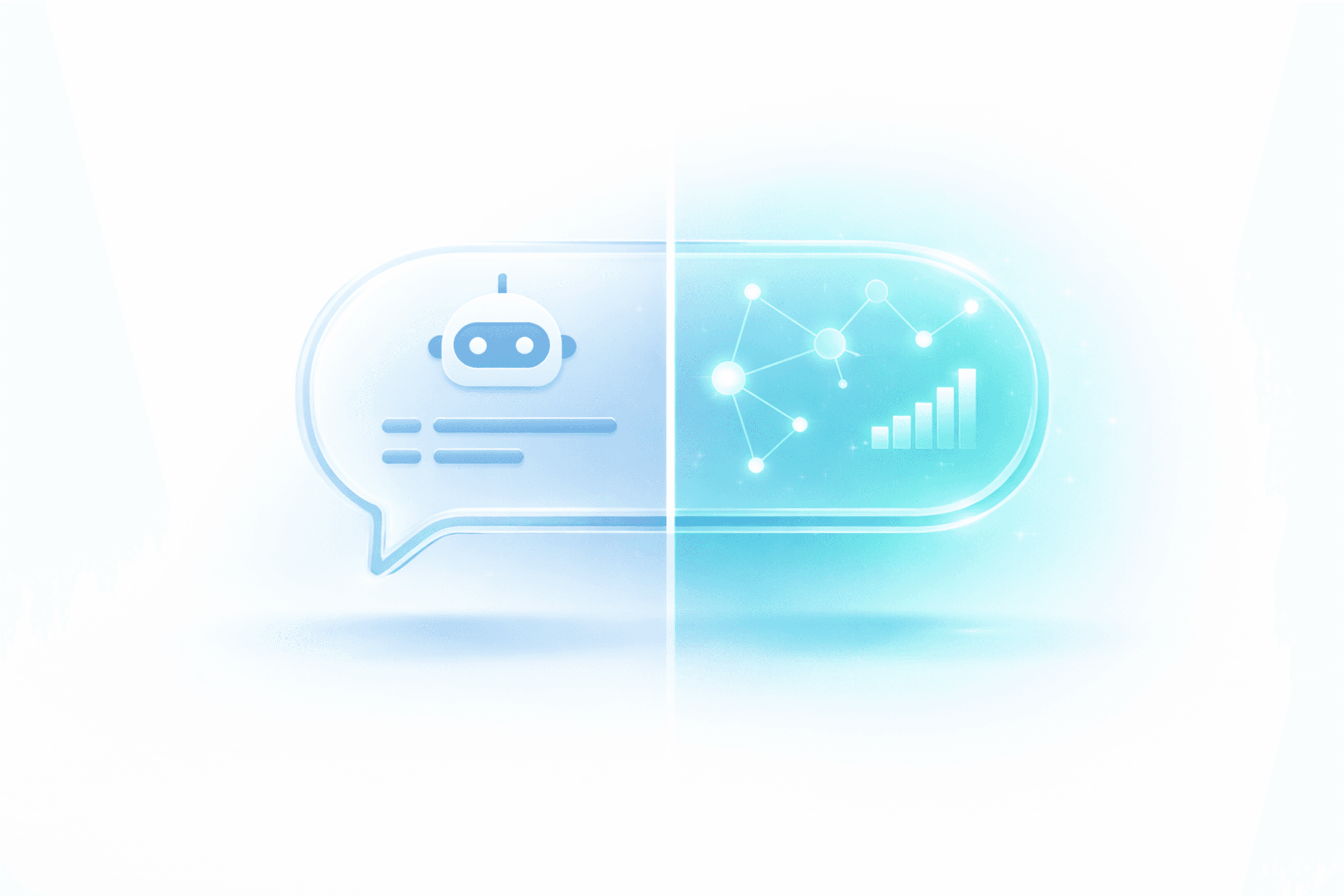
What Is the Difference Between an AI Agent and a Chatbot?
The two often get mixed up, and that's understandable; both chat with you. But under the hood, they work very differently:
- Script vs. goal: A rule-based chatbot follows pre-written question-and-answer flows. An AI agent focuses on a goal and decides the steps toward it based on the conversation.
- Context: A chatbot usually reacts to keywords. An AI agent evaluates the whole message together with the earlier parts of the conversation.
- Data access: A chatbot mostly answers with fixed text. An AI agent connects to live price, stock, order and delivery data to provide current information.
- Taking action: A chatbot provides information. An AI agent can complete actions such as comparing products or adding items to the cart within the conversation.
Which Tasks Do AI Agents Take On in E-Commerce?
In e-commerce, AI agents work at two main touchpoints: the marketplace store where shoppers ask questions and the website where they search for products. Because the needs of these two areas differ, so do the agent's tasks.
In Marketplaces: Answering Product Questions
If you sell on Trendyol, Hepsiburada, Çiçeksepeti or N11, you know the drill: shoppers ask before they add to cart. Does it run small? What's the fabric? Is there a warranty? When does it ship? And most of these questions don't arrive while you're at your desk; according to Dot Assist, 70% of product questions are asked outside business hours. The longer an answer takes, the more likely the shopper moves on to another seller. Response speed affects your store rating too.
Dot Assist Marketplace Agent steps in right here. It handles the questions coming to your marketplace stores like this:
- Answers incoming questions 24/7 in the brand's tone of voice.
- Keeps answers consistent with product information, size charts and past Q&A.
- Can complete missing information with live web research when sources lack an answer.
- Leaves no question waiting outside working hours or during peak times.
On Your Website: Product Discovery and Sales
Your own website is a different story. Visitors usually know what they want but can't express it through filters. There's no filter for "a sofa that fits a small living room and is easy to clean," right?
Dot Assist Sales Agent works here like a personal shopping assistant for your visitors. They don't pick filters, they describe what they need, and Sales Agent:
- Understands the visitor's need in natural language and asks questions to clarify it.
- Finds suitable products in the catalog and compares the options on the criteria the visitor cares about.
- Always answers with up-to-date price, stock, order and delivery information.
- Helps add the chosen product to the cart without leaving the conversation.
- Suggests complementary products that fit the need.
You can use Sales Agent not only on your website but also on your WhatsApp, Instagram and Messenger channels.
Behind the Scenes: Improving Product Information
There's also a side you don't see right away: every conversation leaves you data. You see which questions come up most and what's missing from your product pages. Say shoppers keep asking whether a dress is lined; that means the detail isn't on the page. Your product and category teams can update the description, and the next shopper won't have to ask.
What Is Agentic Shopping?
Agentic shopping means shopping guided by an AI agent. Instead of searching and filtering products one by one, the shopper describes their need in natural language; the AI agent matches this with catalog data, narrows down the options and makes the decision easier.
To see the difference, just look at what gets typed into the search box:
- Classic search: "Summer dress"
- With an AI agent: "I'm looking for a dress that isn't too tight, that I can wear to the office in summer and that also works for dinner."
- Classic search: "Dark spot serum"
- With an AI agent: "I'm 35 and have combination, oily skin. Can you build a routine for dark spots that fits my budget?"
In the second examples, the shopper isn't just searching for a product name: they share their budget, purpose and personal preferences too. Understanding this and turning it into the right product is the real value of an AI agent in e-commerce.
What to Look For When Choosing an AI Agent
If you're thinking about working with an AI agent, make sure you get clear answers on these before you decide:
- Live data connection: An AI agent that isn't connected to price, stock, variant and order data can give outdated information.
- Brand voice: The tone and structure of its answers shouldn't break from the way the brand speaks to its customers.
- Accuracy and limits: An AI agent should recommend only products in your catalog, avoid pushing out-of-stock items and never invent features that aren't in the product information.
- Integration: It should connect to your marketplace accounts, your e-commerce platform and your messaging channels.
- Measurability: Automatic response rate, response time, frequently asked topics and conversations that lead to sales should be reportable.
- Setup time: It should go live without a long software project.
Frequently Asked Questions
What is an AI agent, in short?
It is an artificial intelligence application that interprets information, makes decisions and takes action through connected systems to reach a goal.
What is the main difference between an AI agent and a chatbot?
A chatbot provides information through pre-written flows. An AI agent understands context, accesses live data and can complete actions such as adding to cart within the conversation.
What does an AI agent do in e-commerce?
In marketplaces, it answers product questions 24/7. On the website, it understands the visitor's need, recommends the right product, compares options and makes the purchase decision easier.
What is agentic shopping?
It is shopping guided by an AI agent. The shopper describes their need in natural language, and the AI agent guides them to the right product.
Do I need a software team to use an AI agent?
With ready-made solutions, usually not. For example, Dot Assist Marketplace Agent connects to your Trendyol, Hepsiburada, Çiçeksepeti and N11 stores within minutes. Sales Agent integrates with platforms such as Shopify, Ticimax, ikas, T-Soft, IdeaSoft and WooCommerce, as well as custom-built sites.
In Summary
In short, an AI agent isn't just a tool that answers questions; it's an AI application that understands what your shopper wants, accesses current data and sees the job through. It can take on a lot, from answering customer questions in marketplaces to recommending the right product on your website. When choosing one, checking its live data connection, how well it fits your brand voice and whether you can measure the results is a solid place to start.
Two AI Agents with Dot Assist: In Marketplaces and On Your Website
A question in the marketplace and a product search on the website are different moments of the same shopper. Dot Assist meets both on one platform, with two separate AI Agents.
Marketplace Agent turns marketplace questions into brand-appropriate answers. It learns your product information and brand voice and answers product questions coming to your Trendyol, Hepsiburada, Çiçeksepeti and N11 stores 24/7.
Enis Habif, CEO of Altınyıldız Classics, says that with Dot Assist they cut response time by 8 hours and increased customer satisfaction by 11 points.
Sales Agent is an AI Agent that turns purchase intent into sales. It talks to visitors on your website, asks questions to understand their needs, recommends the right product from your catalog and carries the choice to the cart without leaving the conversation. Visitors who interact with Sales Agent show 60% higher conversion and 35% more add-to-carts than those who don't.
Turn Every Customer Interaction Into a New Opportunity
👉 Try Dot Assist Marketplace Agent free for 10 days and let it answer product questions on your Trendyol, Hepsiburada, Çiçeksepeti and N11 stores 24/7.
🚀 Up to 92% automatic response rate
⚡ Under 50 seconds average response time
📈 Up to 3X purchase impact
⏱️ Setup within minutes
👉 Discover Sales Agent for your website: let visitors describe what they need instead of picking filters.