How to Increase Average Order Value: Cross-Selling and Upselling Examples
What are cross-selling and upselling, and how do they differ? Discover 7 ways to increase average order value, examples from different industries and the most common mistakes.
Finding new customers gets more expensive every day. Ad costs keep rising and competition keeps growing. So what if a shopper who's already on your site, with a product already in the cart, bought a little more in the same order?
That's exactly what cross-selling and upselling do. In this guide, we'll look at what the two terms mean, how they differ, practical ways to increase your average order value and the mistakes to avoid.
What Is Average Order Value?
Average order value (AOV) shows how much a customer spends on average in a single order. It's simple to calculate: divide your total revenue for a period by the number of orders in the same period.
For example, if you made 100,000 TL from 200 orders in a month, your average order value is 500 TL. Raising it to 550 TL means growing revenue by 10% with the same traffic and the same number of orders.
What Is Cross-Selling?
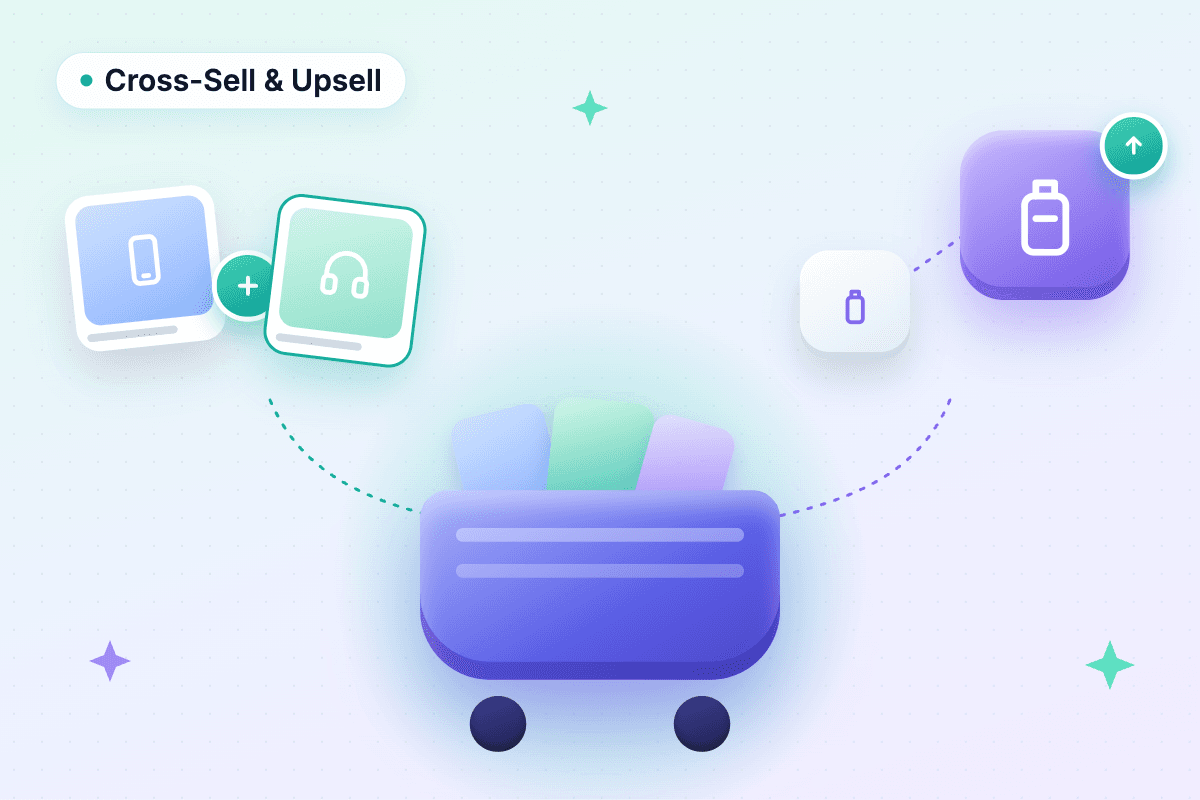
Cross-selling means recommending another product that complements the one the shopper wants to buy. The goal is to meet the need more completely.
- Cosmetics: Recommending sunscreen to someone buying a dark spot serum.
- Home and living: Recommending matching cushions or a sofa cover to someone buying a sofa.
- Electronics: Recommending a case and screen protector to someone buying a phone.
- Fashion: Recommending a bag that completes the outfit to someone buying a dress.
What Is Upselling?
Upselling means recommending a higher version, a larger pack or a more complete alternative of the product the shopper is looking at. The goal is to show the option that fits the need better.
- Cosmetics: Recommending the better-value 50 ml size instead of 30 ml.
- Electronics: Recommending the next storage tier instead of a model that won't have enough space.
- Home and living: Recommending a more durable cotton series instead of a standard bedding set.
What Is the Difference Between Cross-Selling and Upselling?
Both increase order value, but in different ways:
- Cross-selling: Adds a different product to the cart. "This goes well with it."
- Upselling: Replaces the chosen product with a better one. "This might suit your needs better."
- What they share: Both only work when they fit the shopper's need. An irrelevant suggestion doesn't increase sales; it reduces trust.
7 Ways to Increase Average Order Value
- Show complementary products on the product page: A "frequently bought together" section is the best-known form of cross-selling. Make sure suggestions are products that are actually used together.
- Create sets and bundles: Offering products that are often bought together as a bundle makes the decision easier.
- Set the free shipping threshold right: Placing it slightly above your current average order value nudges shoppers toward a small extra item.
- Recommend at the moment of decision: Shoppers are most open to a new suggestion right when they've chosen a product and got their question answered.
- Keep suggestions few: Two or three right suggestions instead of ten help shoppers choose without feeling overwhelmed.
- Turn questions into sales opportunities: Recommending the product that completes the routine to someone asking "Is this serum suitable for oily skin?" is a natural cross-sell.
- Don't recommend what's out of stock: A liked suggestion turning out to be sold out costs both the sale and trust. Suggestions should rely on live stock data.
Common Cross-Selling and Upselling Mistakes
- Irrelevant suggestions: Recommending a random accessory to someone buying a coat shows the system doesn't know the shopper.
- Overdoing the price gap: If the upsell is far above the price of the product being viewed, the shopper feels pressured.
- Same suggestion for everyone: Recommending the same product to two people with different budgets, skin types or uses misses the opportunity.
- Bad timing: If shoppers are flooded with suggestions before deciding on the main product, they may leave without buying anything.
Personalized Cross-Selling and Upselling with AI
Classic recommendation sections show everyone the same products. But the most effective suggestion comes when you know what the shopper wants. A recommendation for someone who says "I have dry skin and my budget is 1,000 TL" is far more accurate than a fixed list on the product page.
This is where AI agents make the difference: they understand the need by talking to the shopper, scan the catalog accordingly and recommend the right complementary product or a better-fitting alternative at the moment of decision.
Frequently Asked Questions
What is cross-selling?
Recommending another product that complements the one the shopper wants to buy, like suggesting a case to someone buying a phone.
What is upselling?
Recommending a higher version or a larger pack of the product the shopper is looking at.
What is the difference between cross-selling and upselling?
Cross-selling adds a different product to the cart; upselling replaces the chosen product with a more complete alternative.
How is average order value calculated?
Divide total revenue for a period by the number of orders in the same period.
Do cross-selling and upselling annoy customers?
Not when the suggestion fits the need; it actually makes their job easier. Annoyance comes from irrelevant or pushy suggestions.
In Summary
Increasing average order value is often easier and more profitable than finding new customers. Cross-selling adds complementary products to the cart, and upselling shows the better-fitting option. The rule is the same for both: the right suggestion works when it's made at the right moment and based on the shopper's need.
Need-Based Cross-Selling and Upselling with Dot Assist Sales Agent
Fixed "frequently bought together" lists show everyone the same thing. Dot Assist Sales Agent talks to visitors on your website, asks questions to understand their needs and recommends complementary or alternative products accordingly.
Sales Agent enriches its recommendations by identifying suitable use cases, seasons and items that can be bought together for every product in your catalog. Because it takes price and stock from live data, it never recommends out-of-stock products. It also carries the chosen products to the cart without leaving the conversation.
Turn Every Conversation Into a Fuller Cart
👉 Let Dot Assist Sales Agent understand your visitors' needs and recommend the right complementary product at the right moment.
📈 60% higher conversion among visitors who interact 🛒 35% more add-to-carts among visitors who interact ⚡ Up-to-date suggestions with live price and stock data